
Scan2Go in Test

Scan2Go
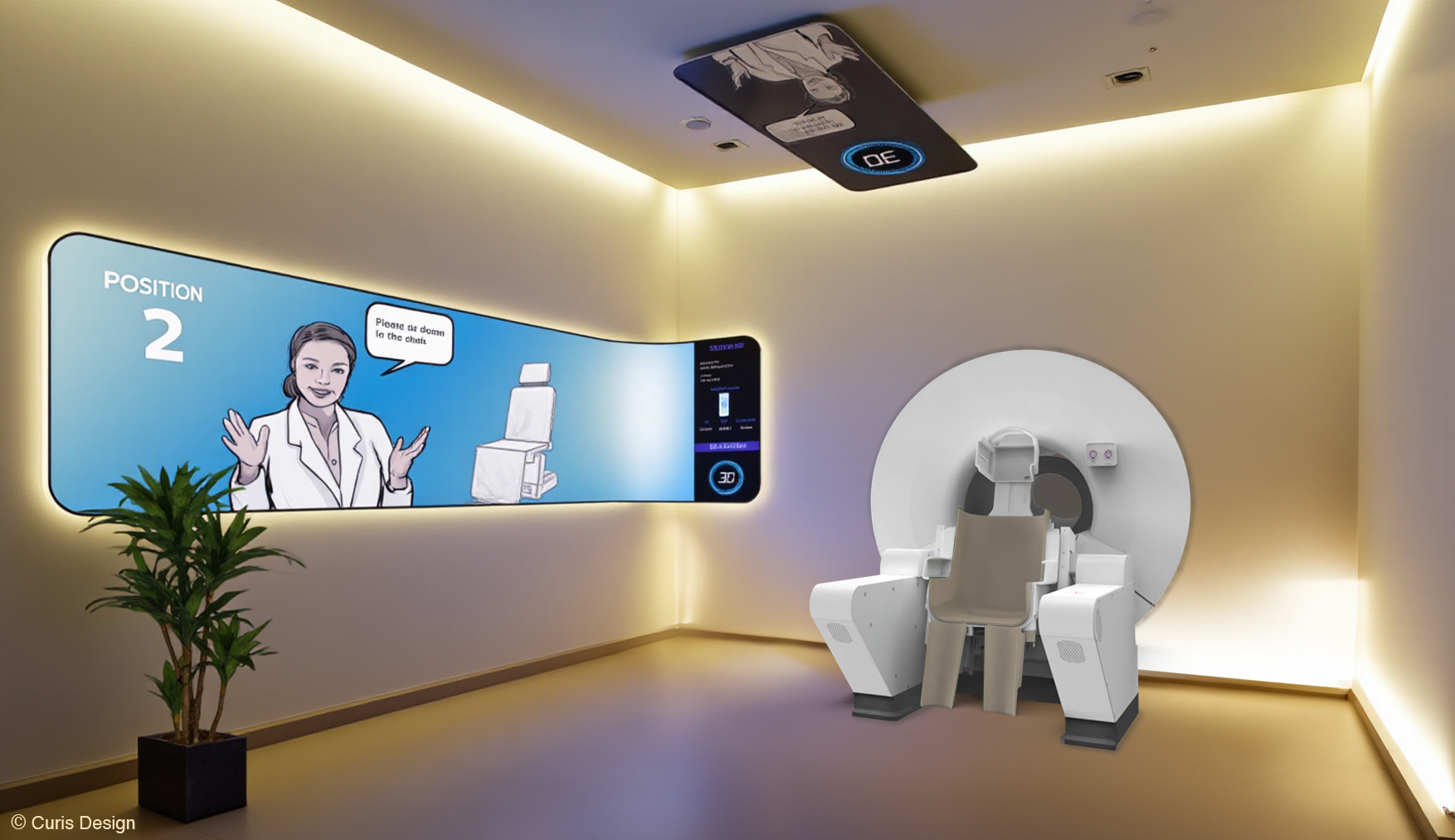
Scan2Go is an autonomous MRI system for large scale diagnostics of brain integrity. This perception study aims to develop and build and evaluate a low-cost automatic self-scan MRI with article intelligence that translates images to diagnose in the elderly care facility Quarijn and neighbouring general practitioner Heuvelrug Medical Center. Scan2Go is a public private partnership, under co-creation with patients. Project partners include:
Curis Design, Utrecht UMC, Amsterdam UMC, Inno Mechatronics, TeslaDC, Futura, Prodrive, Quantib, Erasmus MC, Philips.
Special partner for this project is Quarijn. The operational prototype is instaled at their premises.
Involvement of Inno Mechatronics
Inno Mechatronics is involved as a specialist partner for the SMART patient chair. As a specialist in Patient Positioning Systems (PPS) for the medical industry. Inno Mechatronics regularly takes part in R&D for which existing or new PPS concepts need to be supplied. The current project, for which a special chair needed to be developed, is the first of its kind.
“We are thrilled to see this concept come to life. The hardware works well!”
Scan2Go and the future of diagnostic imagining
Most people experiencing cognitive symptoms want a timely diagnosis and prognosis and to prevent/delay progression to dementia. Emerging treatments are most effective at early disease stages. MRI is a powerful tool for diagnosis, prognostication, and assessment of novel treatment effects. It is, however, relatively expensive as it requires experts to operate the scanner and interpret images. From patients’ perspective, MRI can be experienced as unpleasant and results can be difficult to comprehend.
Our objective is to make MRI comfortable and autonomous, creating an automatic, understandable diagnostic report, thus more accessible for timely dementia evaluation at large, outside of hospitals.
In the first two years, the MRI scanner will be made silent including a SMART chair that safely guides the patient into the MRI while AI translates the images into understandable diagnoses. In the final two years, the perception of autonomous MRI will be investigated in the elderly care facility and neighbouring GP.
